
Course presentation
This course examines the relationship between educational technology, language acquisition, and the ongoing professionalization of Language teachers. Core discussions will interrogate the efficacy and systemic barriers of digital tools in language education, anchoring these evaluations within contemporary ethical, political, and sociological frameworks. The course is designed as an attempt to integrating foundational lectures with collaborative discourse and hands-on, applied methodologies. Thank you for your participation.
All the class material is posted here on this page and it reflects our classes along the semester (no xerox copies needed).
The extra material is posted here.
The course plan and evaluation method is here
Hope you enjoy the course.
Course introduction
From Cyberculture to Artificial Intelligence – The Evolution of Educational Technology and Human Cognition
1. Introduction
Hi. Here in this introduction we aim to explore the intersection of technology, philosophy, and learning. Our goal is to understand how educational technology has evolved over the past century and how we can make sense of this ongoing transformation.
2. The Evolution of Educational Technology
To understand where we are today, we must first look at where we came from. The history of technology in education is not just a history of machines; it is a history of shifting pedagogical paradigms:
- The Instructionist Era (1920s–1970s): Dominated by mass media like educational radio and television. The pedagogical model was behaviorist, heavily influenced by B.F. Skinner’s ‘teaching machines’—focused on stimulus, response, and standardized reinforcement.
- The Constructionist Era (1980s–Early 1990s): With personal computers, researchers like Seymour Papert revolutionized the field. Instead of the computer programming the student, the student programmed the computer (using languages like Logo). Learning became an active process of building logical structures.
- The Web and Cyberculture (1990s–2000s): The internet shifted the focus to human-human interaction mediated by computers. This was the golden age of Distance Education and Virtual Learning Environments.
- Ubiquitous and Blended Learning (2010s): Driven by smartphones and cloud computing, learning left the computer lab entirely, giving rise to the flipped classroom and mobile learning.
- The AI and Agency Era (2020s–Present): Today, we navigate the age of Generative AI. The primary educational challenge is no longer accessing information, but curating it, and learning how to partner with algorithms to enhance human critical thinking.
3. Pierre Lévy: The Sociotechnical Framework
To navigate this landscape, the work of Pierre Lévy remains foundational. His thought provides a sociotechnical map synthesized into three movements:
- The Virtual (1990s): Lévy taught us that ‘virtual’ is not the opposite of ‘real’, but the opposite of ‘actual’. It is a realm of potentialities. Learning is the act of actualizing knowledge. Technologies like writing, the printing press, and computers are ‘cognitive ecologies’ that literally reshape how we think and process the world.
- Cyberculture and Collective Intelligence (2000s): This is his most famous contribution to education. Lévy proposed that ‘no one knows everything, everyone knows something, and all knowledge resides in humanity.’ In this paradigm, the educator’s role shifted from a sole transmitter of knowledge to a curator and animator of the group’s collective intelligence.
- The Semantic Sphere and IEML (2010s–Present): In more recent years, Lévy has addressed the chaos of algorithmic ‘black boxes’. He developed the Information Economy Meta Language (IEML)—a computable language designed to give transparent, semantic meaning to internet data. His current warning is profound and timely: we must design transparent algorithms where human reasoning collaborates with Artificial Intelligence without losing our reflexive capacity and intellectual autonomy.”
4. Expanding the Horizon: Radical Constructivism and the Infosphere
“While Lévy explains the social network, we must also look at the epistemological shift—how the mind actually processes this digital reality. For this, we turn to other vital thinkers:
- Radical Constructivism (Ernst von Glasersfeld): Moving beyond traditional constructivism, Radical Constructivism—extensively debated in the journal Constructivist Foundations—argues that knowledge does not reflect an objective, external reality. Instead, knowledge is an adaptive function. In the digital age, this means educational technologies are not ‘pipelines’ delivering objective facts; they are complex environments that create ‘perturbations’. The student must actively reorganize their experiential world to make sense of AI, simulations, and virtual spaces. The technology doesn’t just deliver content; it alters the learner’s reality.
- Connectivism (George Siemens): Siemens expands on this by arguing that in a digital age, the ‘pipe is more important than the content within the pipe.’ Connectivism posits that learning is the literal process of creating connections and developing a network. Knowledge resides in the network itself.
- The Infosphere and Onlife (Luciano Floridi): Finally, to understand our current AI era, Oxford philosopher Luciano Floridi offers a crucial concept. We no longer go ‘online’ or ‘offline’; we live ‘Onlife’ within the Infosphere. Information and AI are not just tools we pick up and put down; they are environmental forces. In this era, the educator’s job is to help students build a philosophical immune system to navigate an environment where machines possess agency.”
“By combining Lévy’s collective intelligence, the adaptive epistemology of Radical Constructivism, and Floridi’s Infosphere, we gain a complete framework to understand not just what technology does for our students, but what it does to them. Thank you.”
Bibliography
Foundational Books (Theories & Philosophy)
- Glasersfeld, E. von. (1995).Radical Constructivism: A Way of Knowing and Learning. Routledge.
- Lévy, P. (1997).Collective Intelligence: Mankind’s Emerging World in Cyberspace. Perseus Books.
- Floridi, L. (2014).The Fourth Revolution: How the Infosphere is Reshaping Human Reality. Oxford University Press.
- Lévy, P. (2011).The Semantic Sphere 1: Computation, Cognition and Information Economy. ISTE / Wiley.
- Link: Publisher / DOI Link
Valid Academic Articles & Journals (Peer-Reviewed)
- Constructivist Foundations (Journal). An international, peer-reviewed open-access journal focusing on the multidisciplinary foundations of radical constructivism and second-order cybernetics.
- Link: https://constructivist.info/
- Relevance: The primary academic hub for understanding how cognitive architectures adapt to new technological perturbations.
- Riegler, A., & Steffe, L. P. (2014).What Is the Teacher Trying to Teach? Constructivist Foundations, 9(3), 298-305.
- Link: https://constructivist.info/9/3/298
- Relevance: Explores the role of the teacher from a strict Radical Constructivist perspective, deeply relevant for designing digital learning environments.
- Lévy, P. (2010).From social computing to reflexive collective intelligence: The IEML research program. Information Sciences, 180(1), 71-94.
- Link: https://doi.org/10.1016/j.ins.2009.11.036
- Relevance: Explains Lévy’s modern transition toward algorithmic transparency and the semantic web, crucial for understanding his current stance on AI.
- Siemens, G. (2005).Connectivism: A Learning Theory for the Digital Age. International Journal of Instructional Technology and Distance Learning, 2(1).
- Holmes, W., Bialik, M., & Fadel, C. (2023).Artificial Intelligence in Education: Promises and Implications for Teaching and Learning.
Sources of Research (Methodology & Epistemological Base)
The synthesis provided in this presentation was constructed by cross-referencing three distinct epistemological fields:
History of Educational Paradigms: Tracing the progression models defined by pioneers such as Seymour Papert (Constructionism) and George Siemens (Connectivism), mapping the definitive shift from behaviorist instructionism to modern networked, AI-assisted learning.
Philosophy of Technology & Information: Anchored in Pierre Lévy’s evolution from sociotechnical network theory to computational linguistics, combined with Luciano Floridi’s philosophy of the Infosphere, ensuring a non-deterministic view of technology’s role in society.
Radical Constructivism: Based on the epistemological framework established by Ernst von Glasersfeld and continuously updated by the Constructivist Foundations journal. This provides the psychological and cognitive mechanism for how learners adapt to digital environments, moving away from objective transmission models.
Class 1 & 2 – Tecnologias digitais e formação docente reflexiva
What does “knowing how to use a digital tool”mean?

This first session sets the tone for the whole course. It is not a “how to use tools” class, but an invitation to think about what it means to be an English teacher in a world where digital technologies and artificial intelligence are increasingly embedded in everyday school life.
Our aim is to explore the idea of the reflective practitioner and connect it directly to technology integration in language education. Rather than treating apps, platforms and AI systems as neutral “solutions”, we will discuss how teachers develop their professional judgement about when, why and how to use (or not use) specific tools. The focus is on your agency as future teachers: technology should support, not replace, your pedagogical decision-making.
The video on the “reflective teacher” will help us revisit a concept that is frequently used but not always critically examined. Together, we will consider its strengths and limitations: in what ways can reflection empower teachers, and in what ways can it become an empty buzzword if detached from working conditions, curriculum pressures and digital inequalities?
By the end of the session, you should be able to articulate, in your own words, what it means to be a reflective English teacher who works with digital technologies and AI in the context of Rio’s municipal and state schools. You will also begin to map which kinds of competences you want to develop throughout the module to support your future practice.
To start thinking ahead: how would you describe, right now, the difference between “knowing how to use a digital tool” and “being reflective about integrating that tool into your English lessons”?
Texto acadêmico (formação docente / prática reflexiva)
- Enhancing Reflective Practice in Language Teacher Education: Technology as a Critical Reflective Partner. Technology in Language Teaching & Learning, 7(2), 103214 (2025) https://doi.org/10.29140/tltl.v7n2.103214
Vídeo YouTube (professor reflexivo)
- “Professor reflexivo: crítica de um conceito (parte I)” – aula expositiva sobre o conceito de professor reflexivo, seus limites e sua relevância para a formação docente contemporânea.youtube
Reflexive question (Brasil / Rio / EF-EM)
Pensando nas escolas municipais e estaduais do Rio de Janeiro, onde o professor de inglês frequentemente enfrenta turmas numerosas, escassez de infraestrutura e carga horária reduzida, o que significa, concretamente, ser um “professor reflexivo” na incorporação de tecnologias digitais e IA: como articular crítica às condições materiais com uma prática que ainda assim tente ressignificar o uso dos poucos recursos digitais disponíveis?
Class 2.1
You move, chief
This is a scene from Good Will Hunting follows Will Hunting (played by Matt Damon), a 20-year-old, self-taught mathematical genius from a rough neighborhood in South Boston who works as a janitor at MIT. When he anonymously solves an “impossible” graduate-level math theorem left on a hallway chalkboard, his immense talent is discovered by prestigious MIT professor Gerald Lambeau.
Shortly after his talent is discovered, Will is arrested for assaulting a police officer. Recognizing his potential, Professor Lambeau intervenes and cuts a plea deal with the judge: Will can avoid prison time if he agrees to study advanced mathematics under Lambeau’s mentorship and attend mandatory therapy sessions to address his deep-seated behavioral issues.
“Will consegue resolver problemas matemáticos que professores de Harvard não conseguem — mas Sean (Robin Williams), seu terapeuta, argumenta que isso não o torna ‘educado’ de verdade.
Se uma IA pudesse responder qualquer pergunta acadêmica instantaneamente, o que ainda restaria para o professor fazer?”
Activity: work in pairs. list what you consider “irreplaceable” in the act of teaching
Now, take a look at the image below. Have you ever seen it before? what do you know about it?
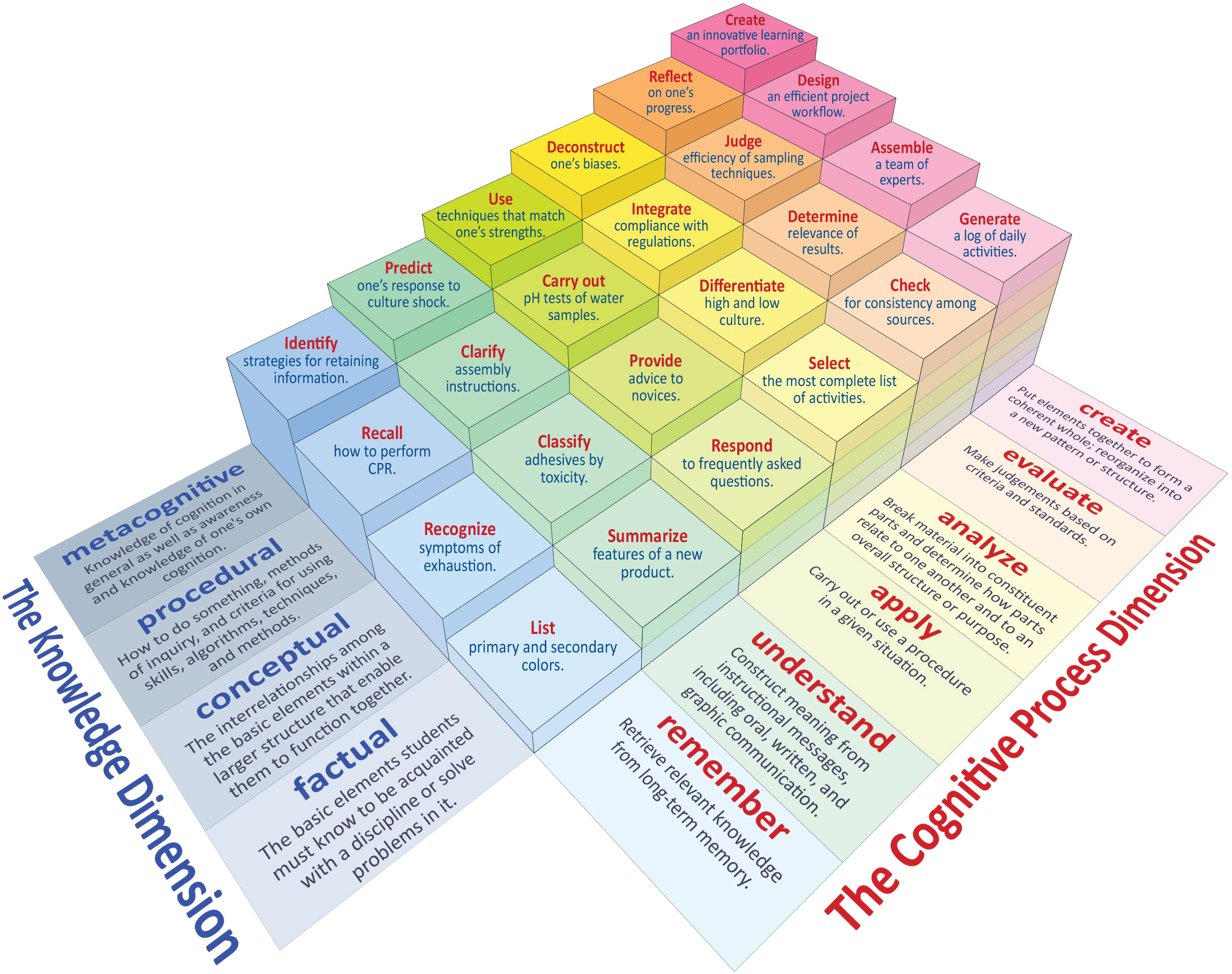
more about it? Visit my page Blog
Hoje vamos refletir sobre dois frameworks — TPACK e SAMR — para analisar criticamente onde e como a tecnologia pode (ou não) apoiar o ensino, sem perder de vista o que a cena de Sean e Will acabou de nos lembrar: a educação nunca é puramente técnica.
TPACK AND SAMR
Have you ever heard about TPCK and SAMR? If not, use your sourcers to find what they are in the next 5 minutes.
texto academico
Read Kohnke and Zou (2025), “Artificial Intelligence Integration in TESOL Teacher Education: Promoting a Critical Lens Guided by TPACK and SAMR”, focusing on how TPACK addresses the interplay of technology, pedagogy and content knowledge, and how SAMR evaluates the transformative potential of AI tools
videos
Reflexive question
Quando inserimos sistemas de IA dentro da lógica TPACK/SAMR, o que passa a contar como “conhecimento tecnológico” do professor de inglês: saber operar a ferramenta, compreender seus modelos algorítmicos, ou ser capaz de criticar politicamente o que ela faz com língua, sujeito e currículo?
Explainer video
Class 3
New poetry
What is going on in this video? Why is the teacher asking the students such questions?
Now take a look at the following video, how do they connect?
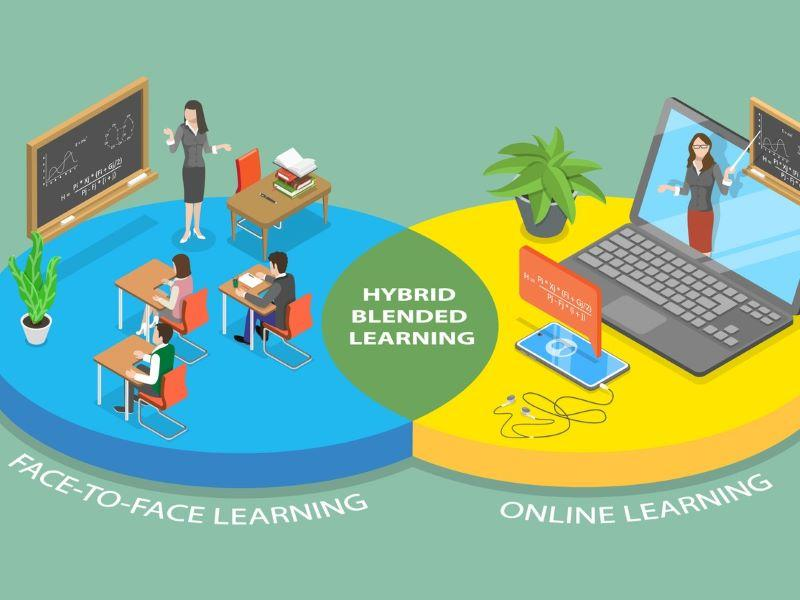
HyFlex classrooms and adaptive learning in ELT
Class 4
Evaluation, Technology and Student Voice — Negotiating How We Will Be Assessed
Who gets to decide how you are graded?
This session shifts the lens from analysing tools (as we did with TPACK and SAMR) to analysing ourselves — specifically, the systems that will judge whether we have learned anything at all. It is not a class about grading software or plagiarism detectors. It is an invitation to interrogate what counts as “fair” assessment when technology, and increasingly GenAI, sits inside that judgement.

This session shifts the lens from analysing tools (as we did with TPACK and SAMR) to analysing ourselves — specifically, the systems that will judge whether we have learned anything at all. It is not a class about grading software or plagiarism detectors. It is an invitation to interrogate what counts as “fair” assessment when technology, and increasingly GenAI, sits inside that judgement.
Our aim is to move you from being passive recipients of an evaluation method decided elsewhere, to active participants who can articulate, defend and negotiate what a fair, aligned and technologically honest assessment looks like for this very course. Rather than treating the syllabus’s evaluation section as fixed and untouchable, we will treat it as a design object — one that you have a legitimate voice in shaping.
The reading on constructive alignment will help us revisit an idea most of you have experienced without ever naming it: the frustration of being assessed on something that was never actually taught or practised. Together, we will consider its strengths and its blind spots — in what ways can “alignment” empower both student and teacher, and in what ways can it become a bureaucratic checkbox detached from the lived, messy reality of a Rio classroom with forty students and one working projector?
By the end of the session, you should be able to argue, in your own words and with reference to the readings, what role — if any — GenAI should play in how you are assessed in this course. You will also help produce a provisional, class-negotiated recommendation on our evaluation method going forward.
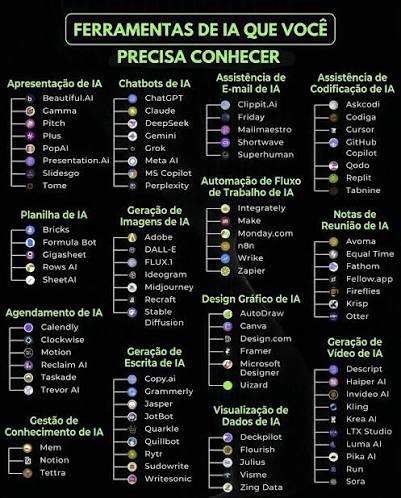
try the following prompt in a GenAI tool of your choice
“Generate a range of assessment formats that could demonstrate understanding of the content for a undergraduate discipline called Prática de ensino em Língua Inglesa I at UERJ with a diverse group of learners. Use the site of the course as a main reference: https://marcellodeoliveirapinto.com/pratica-de-ensino-em-lingua-inglesa-i-uso-de-tecnologia/”

Text 1 – after the classroom debate, read this text.
“Assessment is an essential part of learning. It serves not only to measure, but also to support
student learning (Brady et al., 2019). Meaningful assessment can guide learning and positively
influence the acquisition of learning outcomes (LOs), while inappropriate assessment may hinder
learning. Therefore, it is essential that teachers use assessment methods directly related to
intended LOs, in line with the principle of constructive alignment (Biggs, 1999), supporting a deep
approach to learning (Entwistle & Ramsden, 2015).
There are several criteria affecting the utility of assessment. According to the conceptual model
for defining the utility of assessment (van der Vleuten, 1996), the criteria include reliability, validity,
educational impact, acceptability, and cost of assessment. Criteria are weighted based on the
importance attached to them by particular users in respective contexts. In relation to this, an
approach has been proposed (Divjak et al., 2021) in which weights are assigned to intended Learning Objectives,
and distributed to assessment tasks aligned with the LOs, using multi-criteria decision-making.
Methods used to assess learning include formative and summative assessment. While the first
refers to collecting data in order to improve students’ learning, the second refers to using data to
assess students’ knowledge after completing a learning sequence (AERA et al., 2014; Dixson &
Worrell, 2016). It has been pointed out (Ramsden, 2003, p. 187) that there is ’no sharp dividing
line between assessment and teaching in the area of giving comments on learning’. This points
to the need for alignment between formative and summative assessment. It also implies that the
same assignments can be used both for formative assessment and feedback, and a final mark
contributing to a course grade (p. 190). Whatever the type of assessment, it should meet the
minimum reliability and validity standards (AERA et al., 2014). In flipped classroom approaches,
particular focus is usually put on formative assessment, which is particularly relevant with respect
to individual student work (Talbert, 2017).”
Divjak, B., Rienties, B., Svetec, B., Vondra, P., & Žižak, M. (2024). Reviewing Assessment in Online and Blended Flipped Classroom. Open Research Online. oro.open.ac.uk/97687
Constructive alignment
Constructive alignment is a course design method created by educational psychologist John Biggs in 1996. It connects three core parts: intended learning outcomes (what students should do), teaching activities (how they practice), and assessments (how they are graded), so that all parts work together.
Key Ideas
- Constructive: Students build their own knowledge and meaning through active learning and doing, rather than just listening.
- Alignment: The goals, classroom tasks, and tests match each other completely. If a goal says students must solve problems, the test must ask them to solve a problem, not just memorize facts.
Core Steps to Build It
- Define Goals: Write clear, measurable intended learning outcomes for what students must achieve.
- Plan Practice: Choose teaching methods and tasks that give students direct practice to reach those specific goals.
- Check Results: Design tests and assignments that measure if students actually met those initial goals.
THE FOUR POSITIONS
vamos debater, em grupos, quatro modelos possíveis de avaliação para o restante do curso — não como opinião pessoal, mas como posição a ser defendida — sem perder de vista o que a leitura de Seuwou acabou de nos lembrar: uma IA pode gerar opções, mas não pode decidir, por nós, o que é justo
Have you ever had to argue for something you disagree with? That is exactly the exercise now. Work in your assigned group for 10 minutes and prepare your three strongest arguments.
| Group | Position to argue | Key tension |
|---|---|---|
| A | Traditional, instructor-set assessment (no GenAI) | What is lost if students design their own assessment? |
| B | Fully student-negotiated, choice-based assessment | How do we ensure fairness if everyone chooses differently? |
| C | GenAI-embraced, co-designed assessment (AI as facilitator) | Where is the line between AI generating options and AI generating the work itself? |
| D | Continuous portfolio with peer- and self-assessment | Does removing high-stakes exams increase or decrease real learning? |
Your ten points
We close today’s session the way any negotiation should close: with a decision: choose our evaluative instrument (and model) according to what you now, genuinely, believe should guide how this course evaluates you.
This is not a binding vote. It is what Divjak et al (2024) would call a formative moment disguised as a summative one: the process of deciding matters more than the number that comes out of it.
Now, post your group suggestion in our Padlet
https://padlet.com/MarcelloUnirio/pratica-de-ensino-2026-1-u9s9fjeazuy69vqb
After our decision let’s finish with a reflection:
“Having debated this today, how has your own understanding of ‘fair assessment’ changed?”
later: individually, respond to this question in our class Forum referring to at least one reading and one moment from today’s debate.
Take one last moment to think.
Is our choice what fair assessment looks like — or just what it looks like today, in this room, with this group?
Se a avaliação deste curso for, ao menos parcialmente, resultado desta negociação, isso nos torna — professor e alunos — mais responsáveis pelo que acontecer a seguir? Ou apenas transfere a pressão do professor para o próprio grupo?
Reflexive question (Brasil / Rio / EF-EM)
Pensando nas escolas municipais e estaduais do Rio de Janeiro, onde muitas vezes a avaliação é definida por diretrizes externas (SME, currículo mínimo, provas padronizadas) e o professor tem pouca margem de manobra, o que significa, concretamente, negociar avaliação com os alunos: é possível praticar avaliação negociada dentro de um sistema tão rígido, ou isso é um privilégio de contextos com mais autonomia institucional?
Extra reflexive question
podcast summary
Class 5
UNESCO, MEC, AI and Human-Centred Teacher Education

The following extract is adapted from the Brazilian Ministry of Education’s guidance on AI in Basic Education:
“Before adopting an AI system, schools should identify the educational objective it is meant to support, explain why it is preferable to other options, and test whether its content and use are appropriate for the curriculum“
Referencial para o Uso e Desenvolvimento Responsáveis de Inteligência Artificial na Educação
If a school must first prove that an AI tool serves a clear educational purpose, what evidence would convince you that the tool is helping English learning rather than simply making teaching appear more modern?
Write down your group ideias in this padlet
Jigsaw
Jigsaw*: UNESCO AI Competency Framework for Teachers
The following four short handouts are adapted from UNESCO’s AI Competency Framework for Teachers.
Work in groups!
Group A — Human-Centred Mindset
Core idea
AI should serve people, education and social wellbeing. Teachers remain responsible for educational decisions: they decide whether an AI tool is appropriate, how it will be used, and when it should not be used. A human-centred approach values human agency, accountability, inclusion and respect for linguistic and cultural diversity.
Read and discuss
AI can support teaching, but it should not replace the teacher’s professional judgement or students’ opportunities to think, communicate and learn. Before using an AI system, teachers should consider who may benefit, who may be excluded, and whether the tool respects students’ rights and dignity.
Your task
Create one slide for the course website that includes:
- A one-sentence definition of a human-centred approach to AI.
- One decision that must remain under the English teacher’s control.
- One example of an AI use that could strengthen student agency.
- One warning about a use that could weaken agency or inclusion.
Group B — Ethics of AI
Core idea
Teachers need to understand the ethical principles, regulations and practical rules that shape responsible AI use in education. This includes attention to privacy, data protection, fairness, bias, transparency, accessibility, authorship and accountability.
Read and discuss
AI systems can reproduce unequal patterns found in their data. They may provide inaccurate information, privilege dominant linguistic norms, expose student data or make it unclear who is responsible for a decision. Responsible use therefore means questioning an AI output rather than treating it as neutral or automatically trustworthy.
Your task
Create one slide for the course website that includes:
- Two ethical risks connected to AI use in an English class.
- One practical safeguard for each risk.
- One classroom rule for students’ responsible use of GenAI.
- A short statement explaining why the teacher remains accountable.
Group C — AI Pedagogy
Core idea
AI pedagogy concerns the purposeful connection between AI tools and educational methods. Teachers should identify the potential benefit of a particular AI system, choose it for a clear learning objective, and use it in ways that preserve human-centred teaching and learning.
Read and discuss
An AI tool is not pedagogically valuable simply because it is new, fast or popular. It becomes meaningful when it supports a language-learning goal and encourages students to practise, analyse, evaluate or create. For example, students may compare an AI-generated paragraph with their own draft, identify weaknesses, and collaboratively revise it for a specific audience.
Your task
Create one slide for the course website that includes:
- One English-learning objective for EF/EM.
- One carefully limited use of AI that supports that objective.
- One student activity requiring critical thinking, not passive acceptance of an AI output.
- One teacher action that ensures the activity remains pedagogically purposeful.
Group D — AI for Professional Development
Core idea
AI may support teachers’ lifelong professional learning, including individual reflection, collaboration with colleagues, participation in professional communities and improvement of teaching materials. However, teachers should use AI critically and should not allow it to replace professional dialogue, contextual knowledge or reflective judgement.
Read and discuss
A teacher might use AI to generate possible lesson ideas, identify alternative classroom strategies, organise reflective notes or compare versions of a teaching resource. Yet, the teacher must evaluate the suggestions against curriculum requirements, learners’ needs, school conditions and ethical responsibilities. Professional development is strengthened when AI supports collaboration and reflection rather than isolated dependence on automated answers.
Your task
Create one slide for the course website that includes:
- One appropriate use of AI for an English teacher’s professional development.
- One example of a decision that cannot be delegated to AI.
- One way colleagues could use AI collaboratively and critically.
- One reflection question that a teacher should ask after receiving an AI-generated suggestion.
Sources
*The jigsaw technique is a method of organizing classroom activity that makes students dependent on each other to succeed. It breaks classes into groups
Extra activity
Watch the interview below. Compare his opinions to what you have published in the padlet and the ideas develop in the Jigsaw. We will check it in the next class.
Class 6
Whose English does the algorithm speak?
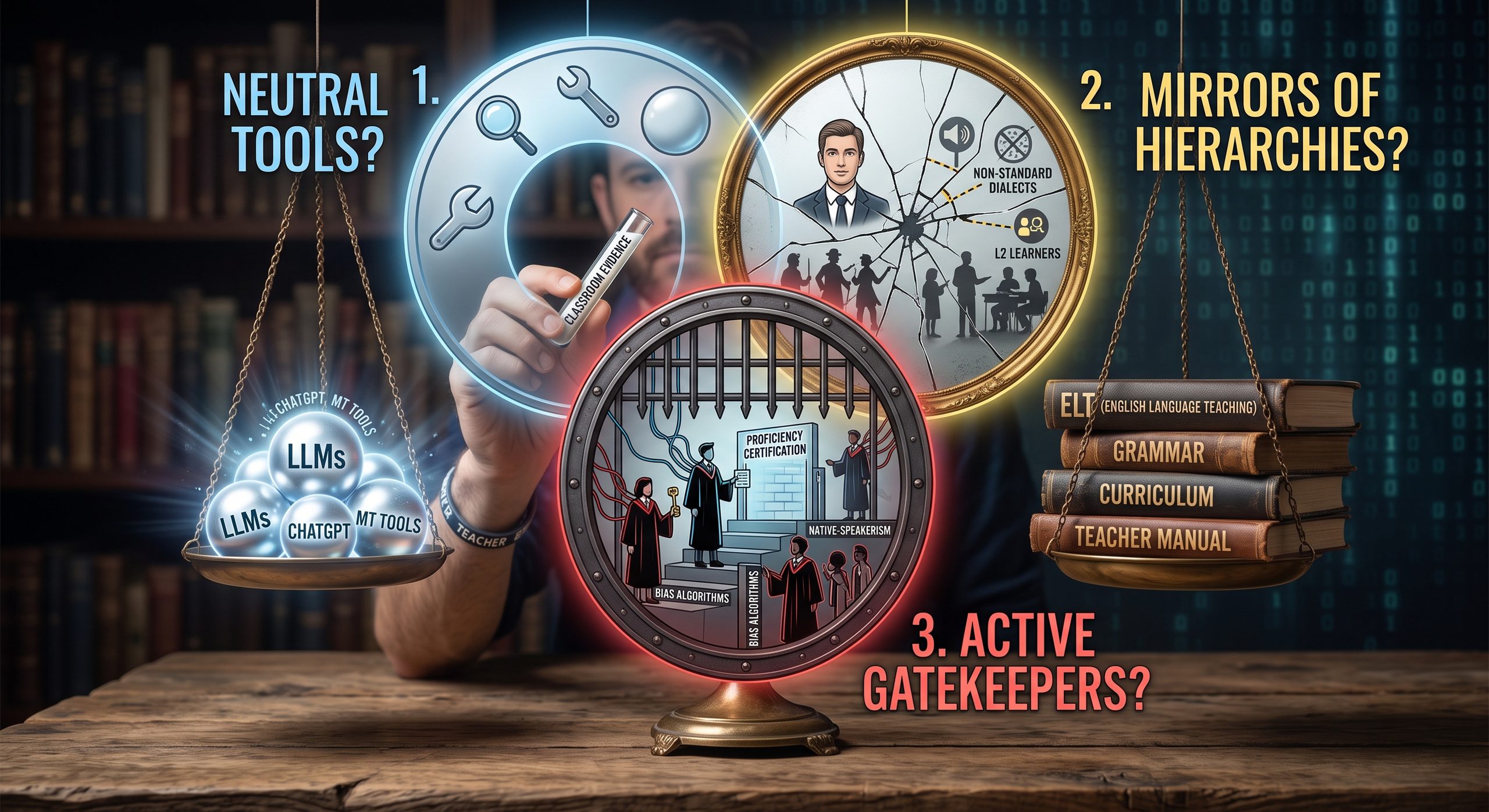
Every time a student opens a translator, a grammar checker, or a chatbot, something invisible happens before a single word appears on screen: a set of statistical choices about which English counts as “correct,” whose voice is worth predicting, and whose is worth ignoring. This session asks you to stop treating that invisibility as neutral.
We move now from analysing frameworks (TPACK, SAMR) and negotiating evaluation, into a more unsettling territory: the algorithms sitting quietly beneath every tool we have discussed so far. Cyberculture 2.0 is no longer just about connectivity — it is about who gets represented, corrected, and understood by the systems mediating global communication, and who gets flattened, mistranslated, or erased in the process. The readings this week make an uncomfortable but necessary claim: large language models do not simply reflect the English language — they reflect a hierarchy within it. Training data overrepresents dominant, standardised varieties (largely American and British English), while non-standard dialects, multilingual repertoires, and underserved languages are systematically underrepresented or actively penalised. This is not a glitch to be patched. It is what some scholars call language modeling bias, and others call algorithmic standardisation — a built-in preference, not an accident
Antes de seguirmos: pense em uma vez em que você, ou um aluno seu, usou um tradutor automático ou corretor de texto e sentiu que sua forma de falar “não contava” — que precisava ser convertida em algo mais “padrão” para ser aceita pela máquina.
Agora pesquise e prepare em grupos uma definição breve de language modeling bias/algorithmic standardisation. Post it on our Padlet and be ready to present it
The coded gaze, the coded tongue
Joy Buolamwini calls it the “coded gaze” — the bias built into a system by the people who coded it, and the data they chose (or failed) to include. Applied to language, we might call it the coded tongue: the quiet, structural preference that LLMs show for certain Englishes over others, certain dialects over others, certain writers over others.
“If an algorithm cannot recognise your face, or cannot correctly interpret your dialect, whose fault is that — yours, or the dataset’s?”
Research now shows that LLMs perform measurably worse on non-standard dialect inputs — including African American English — across tasks ranging from sentiment analysis to speech recognition, even when the underlying meaning is identical to a standard-English equivalent. Fleisig and colleagues at UC Berkeley’s BAIR Lab tested two versions of GPT against eight widely spoken English dialects (including Indian, Irish, Jamaican, Kenyan and Singaporean English) alongside Standard American and British English. They found the models routinely defaulted to American spelling — even when British spelling is the norm in the speaker’s own country — and that speakers of non-standard varieties flagged the responses as stereotyping, condescending or demeaning.
Activity: in pairs, run a live test. Choose a sentence written in a non-standard English variety, a regional dialect, or code-switched Portuguese-English (as commonly heard in Rio classrooms). Submit it to a translator or LLM of your choice and observe: does it “correct” the variety into standard English before translating? Does it flag the input as an error? Bring your screenshot to the group discussion.
Now think about your own students. If the tools we increasingly rely on in class silently push every learner’s English towards one standardised model, what exactly are we teaching them to value?
Put the machine on trial
Theory becomes evidence the moment you run your own test. For this activity, the whole class will use a single, freely available tool — Google Translate — chosen precisely because it is the tool most of your future students will actually reach for, unlike research-only systems.
Google Translate is a strong candidate for this exercise for two reasons documented in the literature: independent benchmarking shows its accuracy varies enormously across languages and structures — from 94% for Spanish down to 55% for Armenian in one study — and, more importantly for our purposes, machine-translation systems trained primarily on standardised input have been shown to struggle specifically with dialectal or regionally varied expressions, producing what researchers call a “negative transfer effect” when the input departs from the standard.
Step 1 — Prepare five test sentences (in groups of three)
Each group writes five short sentences to feed into Google Translate (Portuguese → English), deliberately varying the input:
- One sentence in formal, standard Brazilian Portuguese
- One sentence using carioca colloquialisms (gírias cariocas) or slang your students actually use
- One sentence with regional Brazilian vocabulary from outside Rio (e.g. a Northeastern or Southern expression)
- One sentence code-switching Portuguese and English, as seen in social media (“portinglês”)
- One sentence containing an idiom that has no direct English equivalent
Step 2 — Run the test and record results
For each sentence, record in a shared table:
| Sentence type | Google Translate output | Did it preserve meaning? | Did it “flatten” or standardise the variety? | Would a native carioca recognise their own voice in this translation? |
| Standard Portuguese | ||||
| Carioca slang | ||||
| Regional (non-Rio) | ||||
| Portinglês code-switch | ||||
| Untranslatable idiom |
Step 3 — Group verdict
Based on your table, discuss: did Google Translate treat all five sentences with equal fidelity, or did it perform noticeably better on the first (standard) sentence than on the others? If a mismatch occurred, was it a translation failure — or a form of algorithmic standardisation, quietly erasing the variety in favour of a “safer,” more standard output?
“When a machine translation tool cannot handle your students’ authentic voice — their slang, their regional expressions, their code-switching — is the problem located in the students’ English, or in the tool’s design?”
Share your group’s most striking example with the class. Which sentence produced the most surprising — or most troubling — result?
Reflexive question
Se a ferramenta de tradução automática que você testou hoje “corrige” ou apaga a gíria carioca, a expressão regional, ou o portinglês dos seus alunos, isso significa que essas formas de falar são erradas — ou que a ferramenta simplesmente nunca foi desenhada para reconhecê-las como legítimas?
Building the third space: virtual exchange as counter-model
If algorithms quietly standardise, virtual exchange proposes the opposite: direct, unmediated contact between learners across linguistic and cultural boundaries, without a black-boxed system deciding whose English is “correct” along the way. O’Dowd (2025) traces how virtual exchange evolved from early bilingual North-North partnerships into a more genuinely global, equity-oriented practice — one explicitly concerned with inclusion, not just connectivity.
“Can virtual exchange function as a counterweight to algorithmic standardisation, or does it simply move the same platforms — and the same underlying biases — into a different pedagogical format?”
Orsini-Jones and colleagues (2025) describe virtual exchange as creating a postdigital “Third Space” — connected, embodied, relational — where participants, particularly those historically underrepresented, can co-construct pluralised ways of learning rather than being assessed against a single standard.
Activity: in small groups, design a one-paragraph virtual exchange proposal connecting your (hypothetical or real) students with a partner classroom elsewhere — anywhere in the Global South is encouraged. Specify: what language variety would be centred, not corrected? Drawing on what you found in the Google Translate stress-test, how would you prevent the exchange from being quietly re-standardised by autocorrect, translation apps, or AI-assisted messaging during the exchange itself?
Share your proposal with another group. Did they make the same assumptions about “neutral” technology that you did?
Verdict: tool, mirror, or gatekeeper?
We close by returning to the question that opened this class: whose English does the algorithm speak? By now you should have evidence, not just intuition — a table of Google Translate results, a virtual exchange proposal, a list of five mechanisms of bias.
“Having tested these tools yourselves, would you now describe LLMs and machine translators, in the context of ELT, primarily as neutral tools, as mirrors of existing linguistic hierarchies, or as active gatekeepers reinforcing them?”
Activity: individually, write 200–300 words defending one of the three positions above — tool, mirror, or gatekeeper — using evidence from at least one reading and your own Google Translate stress-test results. Bring it to our next session, where we will connect this debate to the course’s ongoing discussion of critical, non-tool-driven technology integration. Bring your writing next class and also send to tarefasprofmarcello@gmail.com (in assunto, include your name and pratica 2006.1) until next class.
One last provocation before you leave: if the algorithm is a mirror, whose face is it actually reflecting back at your students?
Reflexive question (fechamento)
Se cada vez mais ferramentas de IA vão mediar o contato entre falantes de diferentes variedades do inglês e do português, qual deveria ser o papel do professor de línguas: ensinar os alunos a se adaptarem ao padrão que a máquina espera, ou ensinar os alunos a reconhecerem e resistirem criticamente a esse padrão?
Textos acadêmicos
GENERATIVE AI and English language teaching: A global Englishes perspective. Annual Review of Applied Linguistics, Cambridge, p. 1-24, 25 mar. 2025. Disponível em: https://www.cambridge.org/core/services/aop-cambridge-core/content/view/D81BDA6FEFE8F152E1F824BA1544D28D/S0267190525100184a.pdf/generative-ai-and-english-language-teaching-a-global-englishes-perspective.pdf. Acesso em: 02 set. 2026.
O’DOWD, Robert. Virtual Exchange in the new educational landscape: Challenges for foreign language teachers. Language Learning & Technology, v. 29, n. 1, p. 1-16, 2025. Disponível em: https://scholarspace.manoa.hawaii.edu/bitstreams/3fb2bdab-39b0-40f7-b67f-72c8b25927be/download. Acesso em: 02 set. 2026.
ORSINI-JONES, Marina; JACOBS, Lisa; FINARDI, Kyria; WIMPENNY, Katherine. Collaborative online international learning as a postdigital connected, embodied, relational and (socio)material Third Space: female voices. Higher Education Research & Development, v. 44, n. 1, p. 237-252, 2025. Disponível em: https://www.tandfonline.com/doi/full/10.1080/07294360.2024.2398956. Acesso em: 02 set. 2026.
GUTIÉRREZ, Begoña F.; O’DOWD, Robert. Virtual Exchange and Telecollaborative Learning. In: STOCKWELL, Glenn; WANG, Yijen (Ed.). The Cambridge Handbook of Technology in Language Teaching and Learning. Cambridge: Cambridge University Press, 2025. cap. 15. Disponível em: https://www.cambridge.org/core/books/abs/cambridge-handbook-of-technology-in-language-teaching-and-learning/virtual-exchange-and-telecollaborative-learning/88729848A6B46AD544E62C8F6F53E00E. Acesso em: 06 set. 2026. Nota: acesso ao texto integral pode exigir vínculo institucional.
LARGE language models are biased — local initiatives are fighting for change. Nature, 27 nov. 2025. Disponível em: https://www.nature.com/articles/d41586-025-03891-y. Acesso em: 06 set. 2026. Nota: reportagem científica de acesso aberto que sintetiza os achados de Fleisig et al. (BAIR Lab, UC Berkeley) sobre viés dialetal em respostas do GPT a oito variedades do inglês.
CRITICAL evaluation of Google Translate in English-Arabic dialectal translation. Journal of Scientific and Cultural Studies, s.v., s.p., s.d. Disponível em: https://sci-cult.net/index.php/cult/article/download/1666/1142/9072. Acesso em: 06 set. 2026. Nota: usado como base teórica para o “efeito de transferência negativa” discutido na atividade prática de tradução automática (Class 4.2).
BUOLAMWINI, Joy. How I’m fighting bias in algorithms. TEDxBeaconStreet, nov. 2016. Publicado no TED.com em mar. 2017. 1 vídeo (8 min 23 s). Disponível em: https://www.ted.com/talks/joy_buolamwini_how_i_m_fighting_bias_in_algorithms. Acesso em: 9 set. 2026.
CRASHCOURSE. Algorithmic Bias and Fairness: Crash Course AI #18. 1 vídeo (11 min). YouTube, 13 dez. 2019. Disponível em: https://www.youtube.com/watch?v=gV0_raKR2UQ. Acesso em: 9 set. 2026.
Os dois vídeos indicados são amplamente utilizados em contextos educacionais sob licença padrão do YouTube, ambos como recursos acessíveis para discussão de algoritmos e viés. O TED Talk de Buolamwini, apesar de datado de 2016-2017, permanece como a referência seminal sobre o conceito de “coded gaze” e é consistentemente citado em literatura recente sobre ética em IA, o que justifica seu uso continuado em 2026 como ponto de partida conceitual, mesmo em uma aula sobre desenvolvimentos mais recentes em LLMs.
Para a fonte sobre viés dialetal do GPT (Fleisig et al.), optou-se por citar a reportagem da Nature (2025), de acesso aberto, em vez do paper técnico original do BAIR Lab, que pode não estar disponível gratuiamente na íntegra — a reportagem traduz os achados de forma academicamente responsável e cita a pesquisa original, servindo como ponte legítima entre a pesquisa técnica e o uso didático em sala de aula.
Barema de Avaliação
Este instrumento combina critérios de rubricas analíticas para escrita argumentativa baseada em evidências (claim, reasoning, evidence) com critérios de rubricas de reflexão crítica (conexão entre experiência pessoal e conceitos acadêmicos), já que a atividade exige tanto argumentação teórica quanto uso de dados empíricos gerados pelo próprio aluno na Class 6. Foram selecionados cinco critérios, dentro da faixa recomendada de três a cinco por instrumento, para manter o foco em elementos essenciais sem fragmentar excessivamente a avaliação de um texto curto.
| Critério | Excelente (4 pontos) | Bom (3 pontos) | Em desenvolvimento (2 pontos) | Insuficiente (1 ponto) |
| 1. Posicionamento (claim) | Defende clara e consistentemente uma das três posições (tool/mirror/gatekeeper) do início ao fim, sem ambiguidade ou contradição interna | Defende uma posição de forma majoritariamente clara, com pequenas inconsistências ou hesitação pontual | Posição identificável, mas pouco explícita ou apenas implícita; mistura elementos das três categorias sem justificar a escolha | Não fica claro qual das três posições o texto defende, ou o texto trata as três como equivalentes sem decisão |
| 2. Uso de evidência da leitura acadêmica | Incorpora evidência específica e corretamente atribuída de pelo menos uma leitura (ex.: Global Englishes, O’Dowd, Nature/Fleisig), articulando-a diretamente ao argumento central | Cita a leitura de forma reconhecível e relevante, mas com articulação um pouco genérica ao argumento | Menciona a leitura de forma superficial ou apenas como referência decorativa, sem conectá-la ao raciocínio | Não há evidência identificável de nenhuma leitura da Class 6, ou a referência é incorreta/deturpada |
| 3. Uso do teste empírico (Class 6) | Usa resultado(s) específico(s) do próprio teste com o Google Translate (frase, tabela, observação concreta) como evidência central do argumento | Menciona o teste da Class 6 de forma relevante, mas com pouco detalhe específico (ex.: sem citar a frase ou o resultado exato) | Faz referência vaga e genérica ao teste, sem retomar dados reais produzidos na atividade | Não há qualquer menção ao teste prático realizado na Class 6 |
| 4. Qualidade do raciocínio (reasoning) | Estabelece uma cadeia lógica clara entre evidência e conclusão; antecipa e responde a uma objeção plausível às outras duas posições | Estabelece conexão lógica entre evidência e conclusão, mas não considera objeções ou visões alternativas | Raciocínio presente, mas com saltos lógicos ou conclusões que não decorrem claramente da evidência apresentada | Ausência de raciocínio articulado; a conclusão parece desconectada da evidência apresentada |
| 5. Clareza, organização e extensão | Texto bem organizado (introdução, desenvolvimento, conclusão), linguagem clara, dentro da faixa de 200–300 palavras | Organização e clareza adequadas, com pequenos desvios de extensão (até 15% acima/abaixo do limite) | Organização confusa em partes do texto ou desvio de extensão superior a 15% | Texto desorganizado, incompreensível em partes, ou extensão muito distante do solicitado (menos de 200 ou mais de 300 palavras) |
| Pontuação total (5 critérios × 4 pontos máximo para cada critério) | Conceito |
| 18–20 | Excelente |
| 14–17 | Bom |
| 9–13 | Em desenvolvimento |
| 5–8 | Insuficiente |
para transforma em nota no padrào 0-10, dividir o resultado final por 2
Exit ticket task – Faça o download to aquivo abaixo. Preencha, de acordo com a sua redação e envie para tarefasprofmarcello@gmail.com (no assunto, include your name and pratica 2006.1 – autoavaliação) até a próxima aula.
To prompt or not to prompt…

To prompt, or not to prompt: that is the question:
Whether ’tis wiser in the class to suffer
The vague replies of an untutored chatbot,
Or to take prompts against a sea of outputs
And, by revising, improve them. To prompt—
To plan—no more; and by a prompt to say
We shape the task, the audience, the purpose,
The learning goal, and all the checks that teachers
Must make before a worksheet meets a learner.
’Tis a responsibility
Devoutly to be practised. To prompt—to plan—
To plan! Perchance to copy: ay, there’s the risk;
For in that polished answer may appear
What bias, error, stereotype, or claim
Unfit for young and questioning minds
Must give us pause.
There’s the respect
That makes professional judgement necessary.
For who would bear the endless flood of prompts,
The shining slides, the instant lesson plans,
The automatic feedback, rubrics, quizzes,
When one’s own critical mind might still decide
What serves the class? Who would accept
A ready-made activity, bland and smooth,
But that the fear of what the system hides—
Its borrowed voices, data, narrow norms—
Confounds the teacher and makes us rather
Revise the tools we have than blindly trust
Those we know not of?
Thus reflection does make teachers of us all;
And thus the bright complexion of AI
Is tempered by the thoughtful pause of care.
So, prompt with purpose; test each confident reply;
Let human learning, not machine convenience,
Direct the lesson.
This lesson approaches prompt engineering not as a purely technical skill, but as a form of digital literacy, pedagogical design and professional identity construction. Future English teachers must learn to specify purposes, contexts and constraints; critically evaluate AI-generated materials; and make responsible decisions about when AI should support, rather than replace, professional judgement. UNESCO explicitly recommends building teachers’ capacity to engineer and critically evaluate prompts while protecting human agency, pedagogical appropriateness and ethical practice
Bread, knife and jam
Materials / Materiais (bread, knife, jam, napkins, plate)
Students work in groups of four. Each group writes instructions to the teacher to prepare a jam sandwich.
The teacher follows the prompt literally. Missing details should create productive difficulties: if the prompt does not identify sequence, quantities, hygiene, the intended recipient, constraints or a desired final format, the teacher pauses or follows a literal but inconvenient interpretation.
Groups then revise their prompt and try again.
Debrief / Discussão
Students identify which elements improved the second version. The teacher organises their contributions under six headings:
- Purpose: What should be produced?
- Context: For whom and under which conditions?
- Sequence: What happens first, next and last?
- Constraints: What should be avoided?
- Output format: What should the final result look like?
- Revision: How do we improve a prompt after analysing its output?
Prompt engineering involves planning, iterative refinement and critical evaluation of outputs; it is therefore closer to drafting, testing and revising a teaching activity than to issuing a one-off command.
Prompt engineering, literacies and teacher identity
Numa perspectiva prática, a reflexão acima pode ser resumida no seguinte Prompt-planning frame
| Prompt element | Guiding question |
|---|---|
| Role | Who should the AI act as? |
| Task | What should it produce or help with? |
| Context | Which learners, school setting and language level are involved? |
| Learning goal | What should students learn, practise or question? |
| Constraints | What must the AI avoid, not assume or not decide? |
| Output format | What genre, structure, length and language are required? |
| Critical check | How will the teacher check accuracy, bias, accessibility and pedagogical value? |
Tarefa de avaliação
Group design task / Tarefa de criação em grupos — 60 minutes
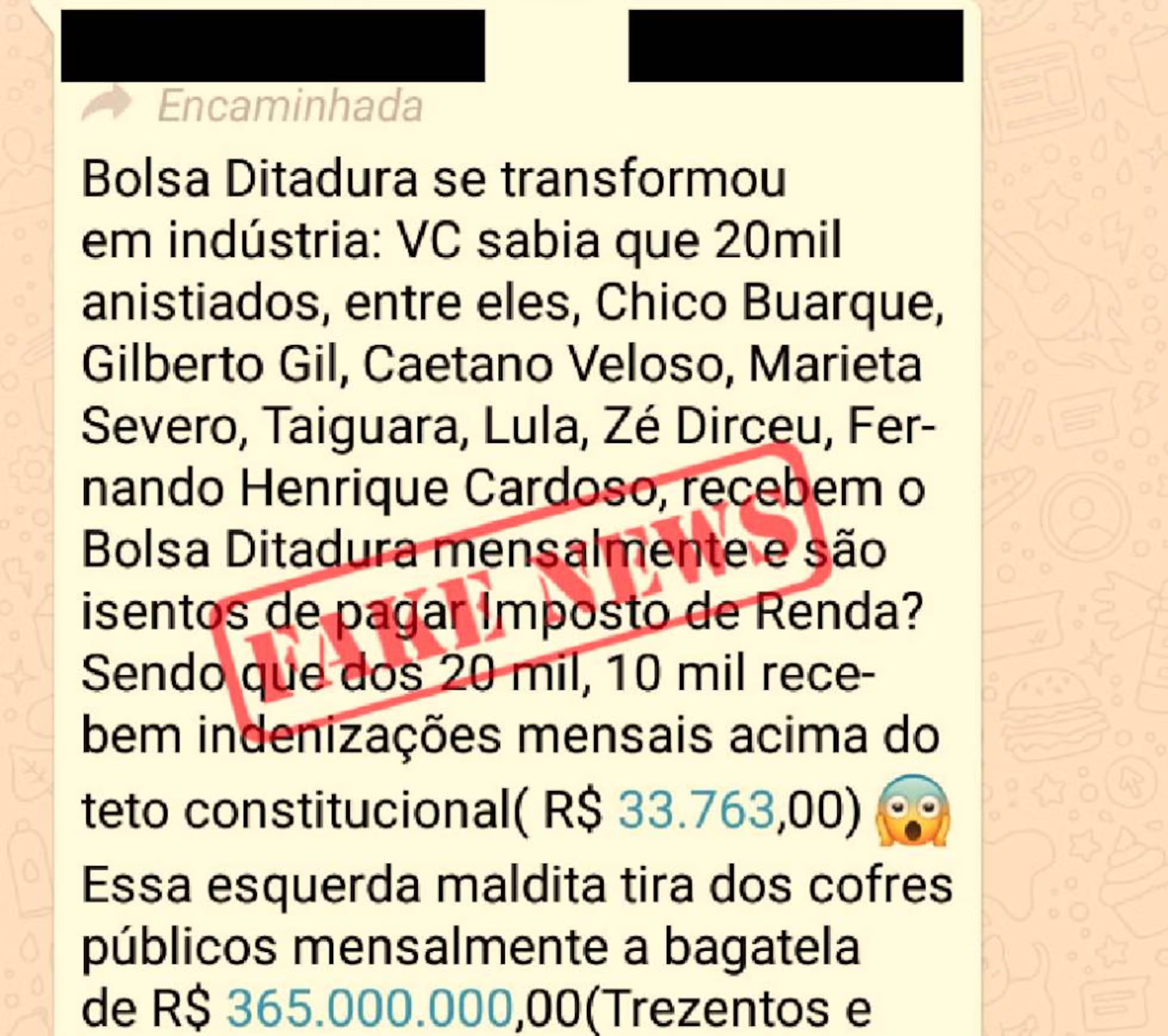
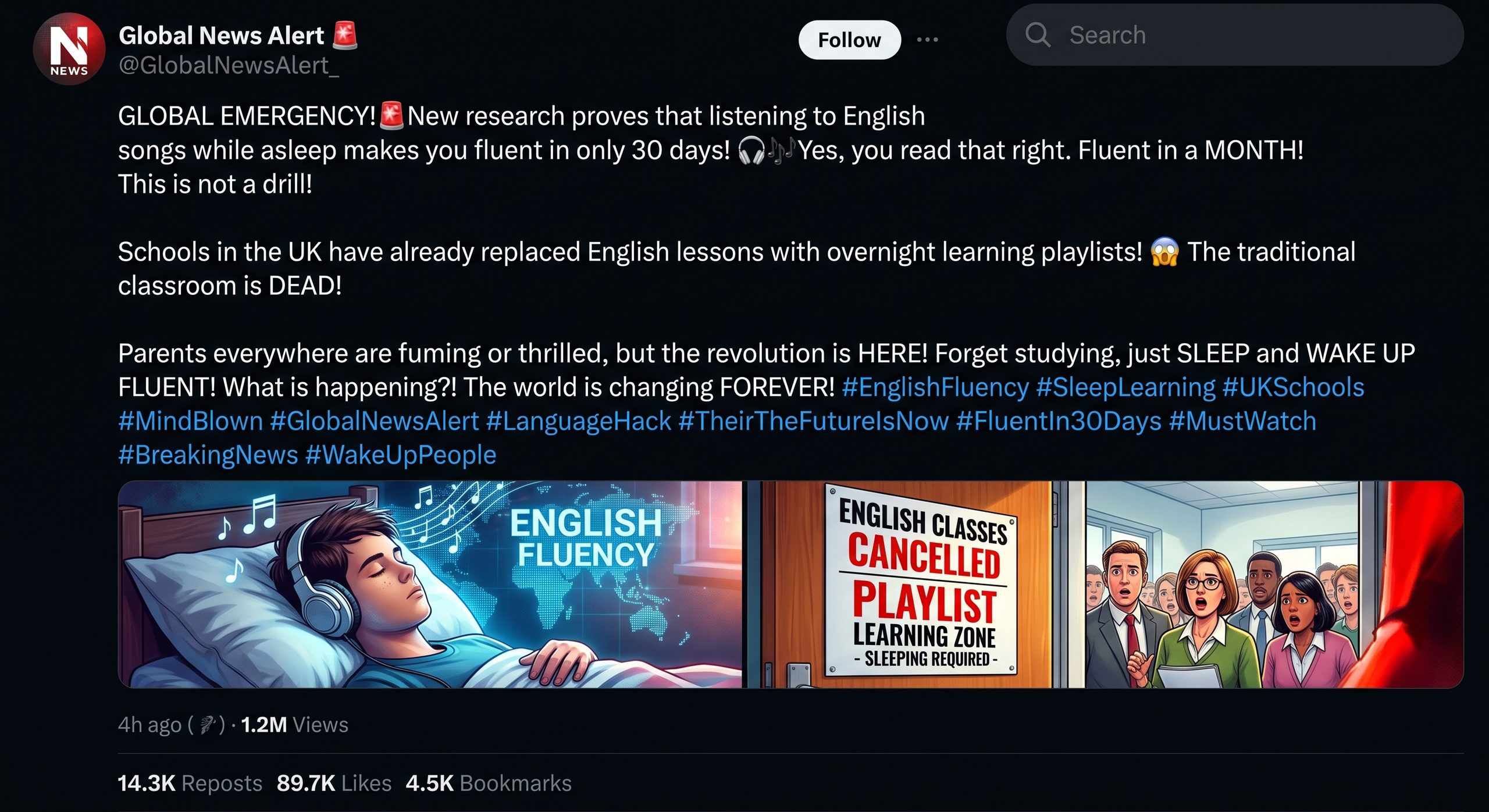
From prompt to critical pedagogy: Fake News
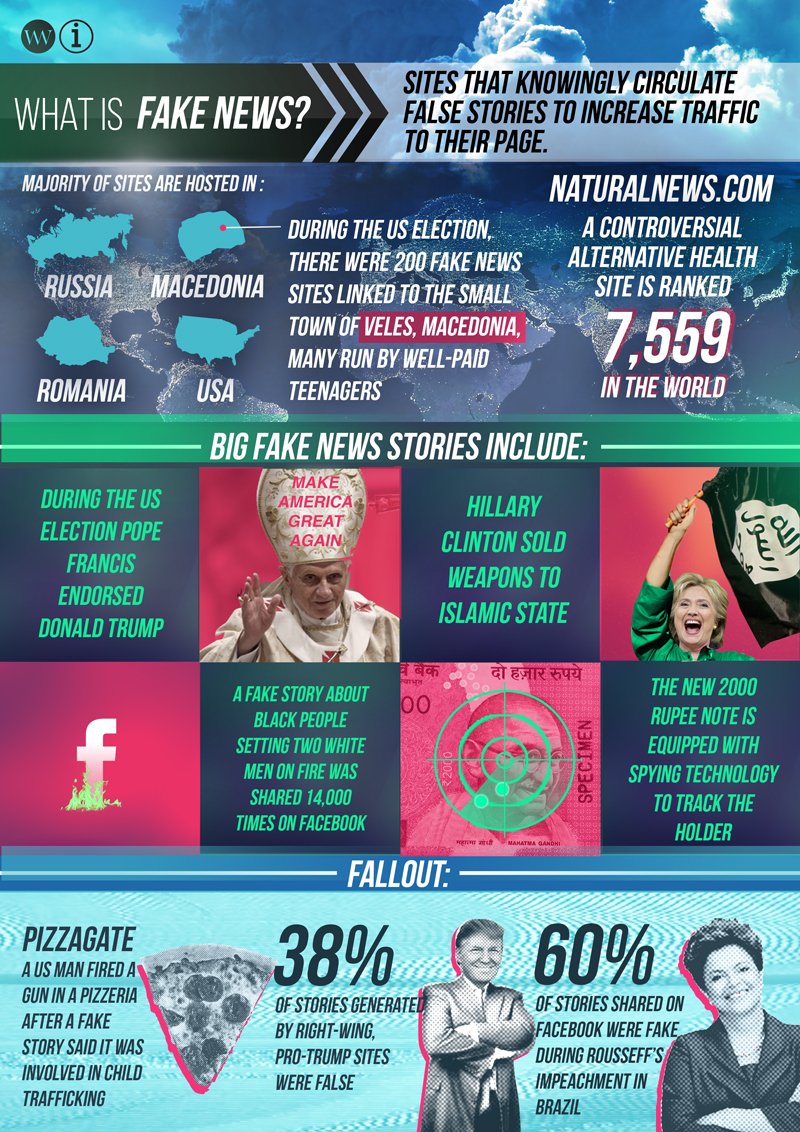
Scenario / Cenário
You are English teachers working with upper-secondary students in a public school in Rio de Janeiro. You are preparing a short sequence around Fake news in politics and election periods. Students have varied access to devices and internet outside school.
Your purpose is not simply to use GenAI to create exercises. You want students to:
- Read fake news and images critically.
- Identify persuasive techniques, exaggeration and potentially misleading strategies.
- Produce a short multilingual or English-language digital awareness resource for other students.
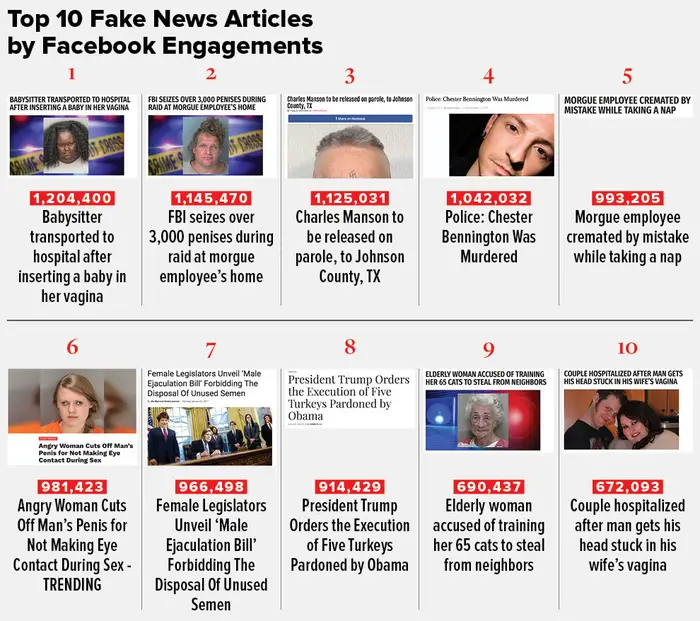
Stage 1 — Weak prompt / Prompt fraco — 5 minutes
Each group writes a deliberately vague prompt, for example:
“Create an English lesson about fake news in political and election periods for teenagers.”
Groups list at least three likely limitations of the output, considering context, language level, political bias, misinformation, local school conditions and learner agency.

Stage 2 — Pedagogical redesign / Redesenho pedagógico — 15 minutes

Groups write an improved prompt that includes:
- A clear learner profile and school context.
- A specific English-learning objective.
- A critical-literacy objective related to fake news or misinformation.
- A task that requires students to analyse, evaluate or create.
- A clear output format.
- Constraints concerning language variety, stereotypes, factual claims, political bias and student data.
- A low-tech or offline alternative for students with limited access.
Stage 3 — Test and evaluate / Testar e avaliar — 10 minutes

Test the new prompt in a GenAI tool.
Groups use the following evaluation questions:
- Does the output support the stated language objective?
- Does it invite critical reading of political culture, or merely reproduce pre-conceived discourse?
- Are the examples factually plausible and appropriate for adolescents?
- Does it contain stereotypes, overly standardised English or political assumptions?
- Does the activity require meaningful student participation and higher-order thinking?
- What must the teacher change before using the material?
Digital output / Produto digital — 30 minutes
Each group creates a single Canva page, Adobe Express visual page or Google Sites mini-page titled:
From Prompt to Critical ELT: Fake news and GenAI experiment
The resource must include:
- The group’s original weak prompt.
- The revised pedagogical prompt.
- The language-learning and critical-literacy objectives.
- A brief description or sample of the AI output.
- Three revisions made after critical evaluation.
- A low-tech/offline adaptation.
- The group’s teacher identity statement.
The completed pages will be published/linked on the course site as a collaborative digital gallery. They may later inform the final multimodal guide for novice teachers on critical uses of digital technologies in English teaching.

Exit ticket
Reflexive question (Brasil / Rio / EF-EM)
Pensando nas escolas municipais e estaduais do Rio de Janeiro, em que o professor de inglês frequentemente trabalha com turmas numerosas, carga horária reduzida, acesso desigual à internet e pressões para aderir a soluções digitais prontas, em que medida o prompt engineering deve ser compreendido como parte dos letramentos digitais e da identidade profissional docente?
References
ADDIUCCI, L.; TEMPERINI, M. Use of prompt engineering for teaching and learning in secondary education: literature review and research perspective. Journal of Information Technology Education: Research, v. 25, art. 18, 2026. Available at: <https://www.jite.org/documents/Vol25/JITE-Rv25Art18Addiucci13454.pdf>. Accessed: 16 Sept. 2026.
CORREIA, A. P.; HICKEY, S.; XU, F. Realizing the possibilities of large language models: strategies for prompt engineering in educational inquiries. Theory Into Practice, 2025. Available at: <https://cete.osu.edu/realizing-the-possibilities-of-the-large-language-models-strategies-for-prompt-engineering-in-educational-inquiries/>. Accessed: 16 Sept. 2026.
GATTUPALLI, N. et al. Conceptualizing and operationalizing prompt literacy for generative AI. 2025. Available at: <https://researchmgt.monash.edu/ws/portalfiles/portal/728753168/722509699-oa.pdf>. Accessed: 16 Sept. 2026.
PARK, J.; CHOO, S. Generative AI prompt engineering for educators: practical strategies. Journal of Special Education Technology, 2025. Available at: <https://journals.sagepub.com/doi/10.1177/01626434241298954>. Accessed: 16 Sept. 2026.
UNESCO. Guidance for generative AI in education and research. Paris: UNESCO, 2023. Available at: <https://unesdoc.unesco.org/ark:/48223/pf0000390241>. Accessed: 16 Sept. 2026.

Course evaluation and feedback
Please answer the evaluation here!