It’s a common assumption that writing is just “speech written down.” While both are two sides of the same linguistic coin, they are fundamentally different modes of communication, each shaped by the unique circumstances of its creation and reception. Rather than a stark binary, it’s more accurate to see them on a continuum, but their typical forms have distinct features. Exploring these differences reveals a great deal about how we create and process meaning.
Discourse in Action: The Live Performance vs. the Studio Album
The most significant distinction between oral and written discourse lies in their context and interactivity. Spoken language is often a live performance 🎤. It’s typically synchronous, meaning the speaker and listener are present at the same time and often in the same space. This allows for a rich, dynamic exchange. 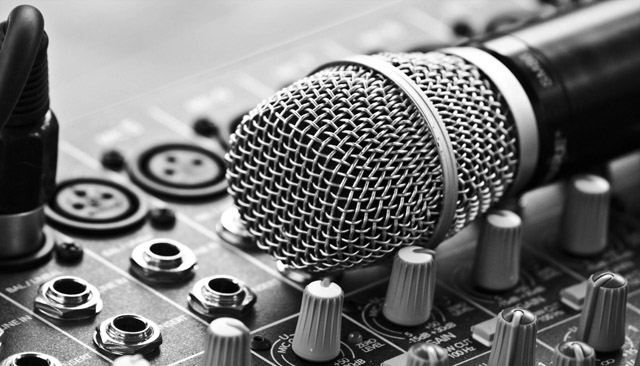 If a listener looks confused, the speaker can immediately rephrase or elaborate. Communication is a duet, involving not just words but also tone of voice, gestures, facial expressions, and shared environmental cues. This co-presence means speech can be less explicit; we can say “put that over there” and point, a shortcut impossible in writing.
Written discourse, by contrast, is more like a studio album 💿. It is asynchronous—created in one time and place and consumed in another. The writer and reader are separated, so the text must be a self-contained, stand-alone object. All the context, clarification, and tone must be built directly into the words on the page. This lack of immediate feedback forces the writer to anticipate the reader’s questions and construct a message that is as unambiguous as possible.
The Architecture of Language
This difference in context directly shapes the structure and style of the language used. Because speech is produced spontaneously and under real-time processing pressure, it tends to be structurally simpler. It’s often characterized by shorter sentences, repetitions, fillers (“um,” “you know,” “like”), and false starts. It is lexically less dense, meaning it uses more common words to express an idea. The structure is often associative, flowing like a conversation rather than following a rigid plan.
Writing, being a planned and edited activity, has a different architecture. It generally has a higher lexical density, packing more information into fewer, more precise words. Sentences are often more complex, using subordination and varied syntax to show relationships between ideas. Written texts are deliberately organized with features like paragraphs, headings, and punctuation to guide the reader through a logical argument. This is the difference between meandering down a path as you chat with a friend and following a carefully marked trail map.
The Ephemeral and the Permanent
Finally, the two modes differ in their permanence and function. Most speech is ephemeral; it exists for a moment and then vanishes, leaving only a memory. Its primary function is often relational and social—to build connections, negotiate immediate tasks, and maintain relationships. Writing, however, creates a permanent record. This durability gives it a unique authority and function. It’s the medium of contracts, laws, history, and formal scholarship. The act of writing something down lends it weight and makes the author accountable for their words in a way that casual speech does not.
Of course, technology is constantly blurring these lines. A text message is written but has the immediacy and informality of speech. A formal, scripted speech is oral but has been crafted with the care of a written document. Despite these hybrid forms, understanding the core distinctions between oral and written discourse remains crucial for being an effective and critical communicator in any medium.
Summary of Key Distinctions
Here is a table summarizing the main points of discussion. bear in mind that the distinction here is based on argumentative written discourse:
| Characteristic | Oral Discourse (Speech) | Written Discourse (Writing) |
| Interactivity | Synchronous, high interactivity, immediate feedback. | Asynchronous, low interactivity, delayed feedback. |
| Context | Shared context, relies on non-verbal cues (tone, gesture). | Context must be created within the text; no non-verbal cues. |
| Structure | Less structured, simple sentences, repetition, fillers. | Highly structured (paragraphs, etc.), complex sentences. |
| Lexical Density | Lower (more words needed to convey information). | Higher (more information packed into fewer words). |
| Formality | Tends to be more informal and personal. | Tends to be more formal and objective. |
| Production | Spontaneous, produced in real-time. | Planned, drafted, and edited. |
| Permanence | Ephemeral, transient, exists in the moment. | Permanent, creates a durable record. |
| Primary Function | Often relational, transactional, and social. | Often informational, legal, and historical. |