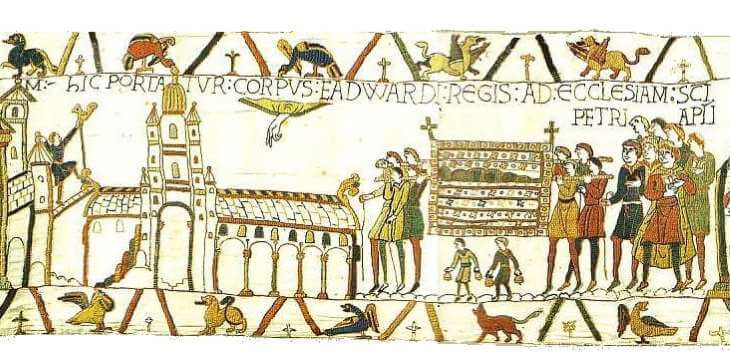
The Norman Invasion was the military conquest of England by William, Duke of Normandy, in 1066, culminating in the Battle of Hastings. This event dramatically altered the course of English history, society, and language.
The Succession Crisis
The invasion’s roots lie in the death of the childless English King, Edward the Confessor, in January 1066. His passing triggered a three-way struggle for the English throne.
Harold Godwinson: The most powerful earl in England and a prominent figure in the royal court. The English council of nobles, the Witenagemot, swiftly elected him king.Harald Hardrada: The formidable King of Norway, who based his claim on a previous agreement between Norwegian and English kings.
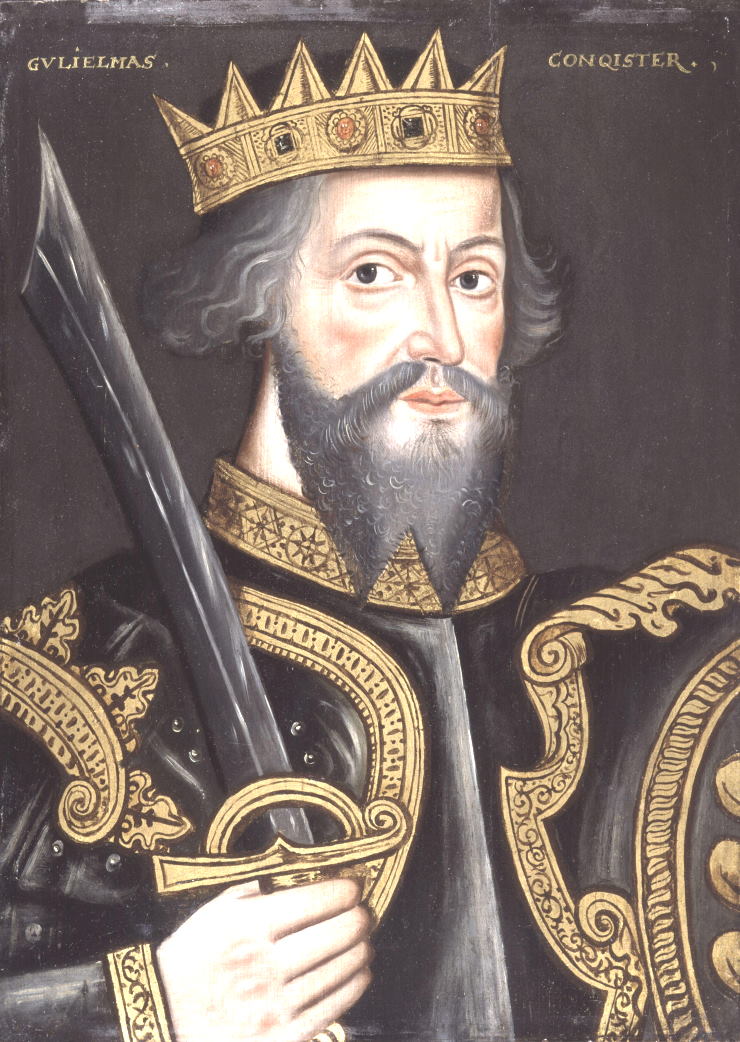
William, Duke of Normandy (below): A distant cousin of Edward, William claimed that Edward had promised him the throne years earlier and that Harold had sworn an oath to support his claim.
The Battles of 1066 ⚔️
England faced two invasions in 1066.4First, Harald Hardrada and Harold Godwinson’s exiled brother, Tostig, invaded northern England. King Harold marched his army north with remarkable speed and achieved a decisive victory at the Battle of Stamford Bridge on September 25, annihilating the Viking force. Just three days later, William’s fleet landed unopposed on the south coast at Pevensey. Harold was forced to march his exhausted army over 240 miles back south to confront the new threat. The two armies met on October 14, 1066, at the Battle of Hastings. The grueling, day-long battle ended with the death of King Harold—famously depicted in the Bayeux Tapestry as being struck by an arrow in the eye—and the defeat of the English army.
Aftermath and Profound Consequences
William the Conqueror marched to London and was crowned King of England on Christmas Day, 1066. However, his rule was not secure, and he spent the next several years brutally suppressing English rebellions, most notoriously in the “Harrying of the North.”
The invasion’s impact was transformative:
A New Aristocracy: The Anglo-Saxon ruling class was almost entirely replaced by a Norman, French-speaking elite. William seized lands and redistributed them among his loyal followers.
Feudal System: The Normans solidified the feudal system, centralizing power in the hands of the monarch.
The Domesday Book of 1086 (picture below), a comprehensive survey of all land and property, was a remarkable testament to this new administrative control.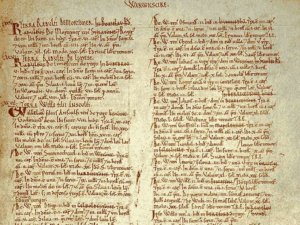
Architectural Revolution: The Normans embarked on a massive building program, constructing hundreds of motte-and-bailey castles, as well as magnificent Romanesque cathedrals and abbeys, to dominate the landscape and project their power.
Linguistic Transformation: For nearly 300 years, Norman French became the language of the court, law, and government. Latin remained the language of the church and scholarship, while English was relegated to the language of the common people. This linguistic division was the single most important event in the history of the English language. The fusion of Old English with Norman French vocabulary led to the emergence of Middle English, a language vastly richer and more flexible than its predecessor, and laid the foundation for the modern English we speak today.
The Norman Invasion was far more than a simple change of ruler. It was a pivotal moment that fundamentally reshaped England’s political, social, and cultural identity. It severed the country’s Scandinavian ties, linked it more closely with continental Europe, and triggered a linguistic evolution that created the English language as we know it.