
I – apresentação do curso
Prezados alunos e alunas,
Tudo bem?
Eu sou o Professor Marcello de Oliveira Pinto. Estarei com vocês aqui nesta disciplina. Nesta apresentação, vou descrever um pouco o curso que você está iniciando e o que você lê aqui reverbera o que já comentamos em sala.
Organização
A disciplina será ministrada de acordo com o calendário da faculdade. Ao longo dos semestres, faremos os ajustes necessários para que o curso possa se adaptar ao seu contexto.
Recursos didáticos
o material do curso está aqui
Está é a ementa do curso UERJ 10060 LINGUA INGLESA III
por aqui focaremos em Semântica/Pragmática: auxiliares modais; tipos de frases e suas funções no discurso; a negação em inglês
Importante – para ativar e rever o conhecimento da língua que o curso demanda apresento algumas atividades de prática linguística que deverão ser feitas em paralelo ao conteúdo apresentado no curso.
Advanced Language Practice – (unidades 7, 8, 18, 19, 27 e páginas 265, 267, 270, 273, 276, 282, 284, 290, 293)
Avaliação
Vocês serão avaliados da seguinte forma: Duas notas comporão sua média final (MF).
A primeira (N1) será composta pela soma das atividades que vocês farão ao longo do curso, totalizando 10 pontos.
A segunda (N2) será composta por uma atividade final, totalizando também 10 pontos.
A média final será a soma das duas notas e para aprovação imediata é preciso que essa média seja igual ou maior que 7 pontos.
importante: somente os alunos devidamente inscritos podem participar da disciplina. Caso você não esteja inscrito, por gentileza procurar a secretaria do seu curso. O docente não inclui ou faz a inscrição do aluno na turma.
Qualquer dúvida sobre as médias para aprovação, prova final, o que é o CR, calendário acadêmico e demais regulamentos, visitem o site da UERJ
Bom trabalho!
Basic concepts
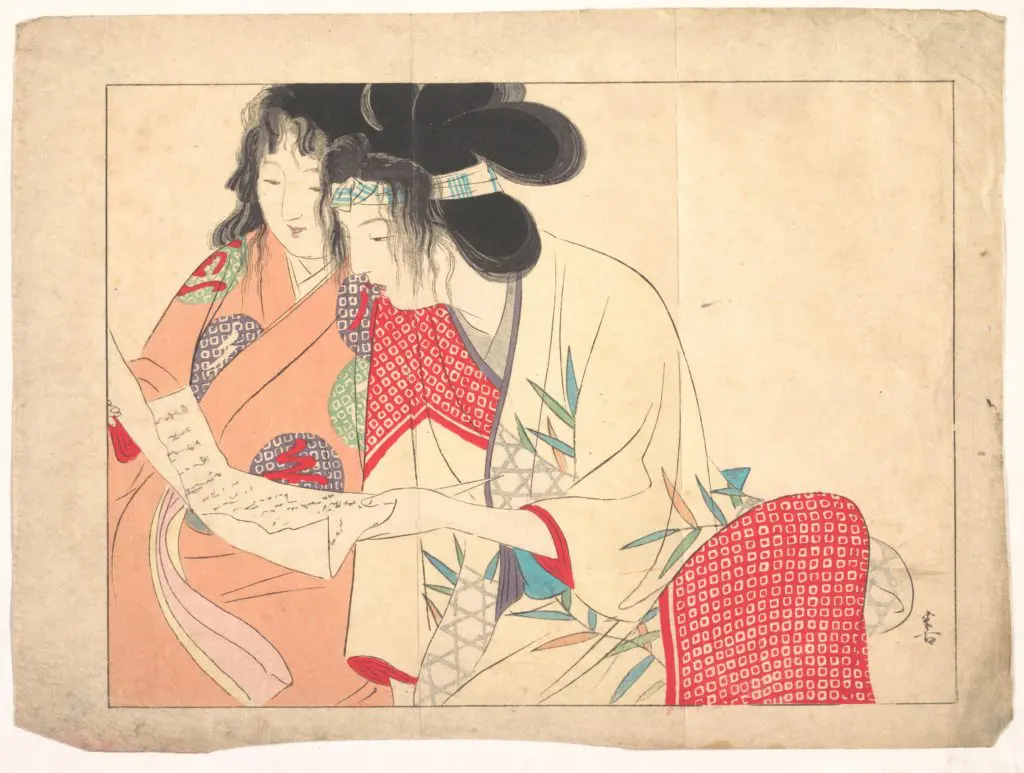
longing for love —
I place a single strawberry
in my mouth
Suzuki Masajo (1906 – 2003)
haiku, unrhymed poetic form consisting of 17 syllables arranged in three lines of 5, 7, and 5 syllables respectively. The haiku first emerged in Japanese literature during the 17th century, as a terse reaction to elaborate poetic traditions, though it did not become known by the name haiku until the 19th century.
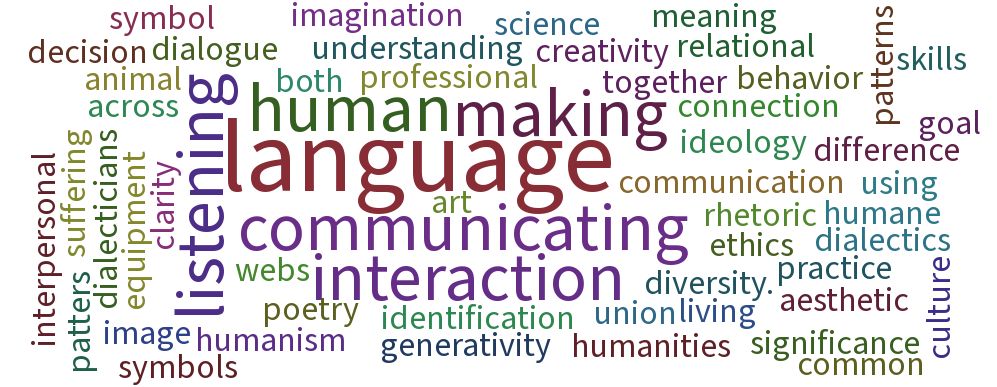
And the meaning is…
Task 1 – Haiku
Este é o nosso Padlet, um mural interativo onde podemos postar algumas notas (posts), imagens, comentários.
Nossa primeira atividade é exatamente inserir nossos Haikus.
Essa atividade já te garante 1 ponto para a primeira nota. Você tem até a proxima aula para garantir os pontos (ou seja, faça a sua postagem até 30/08/2025. Atenção: se você enviar até o prazo, o trabalho valerá 1 ponto. Se você enviar depois disso, passa a valer metade, ou seja, 0,5. Todas as atividades pontuadas e com data limite de entrega seguirão a mesma lógica. Não esqueça de se identificar!

to go further:
What is Language and Why Does It Matter” – Noam Chomsky
An Introduction to Language by Kirk Hazen
What is this thing called language? by David Nunan
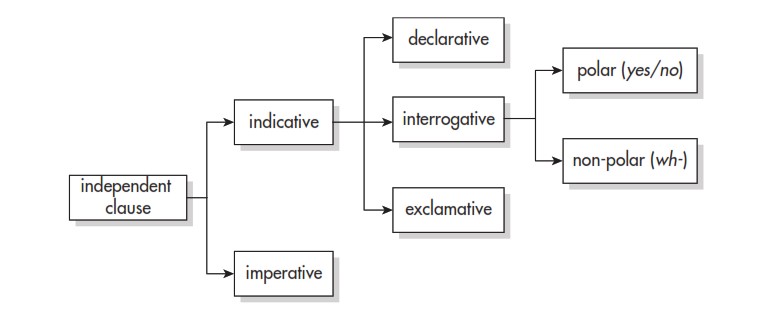
2 – sentence basics
3 – pragmatic watebasket
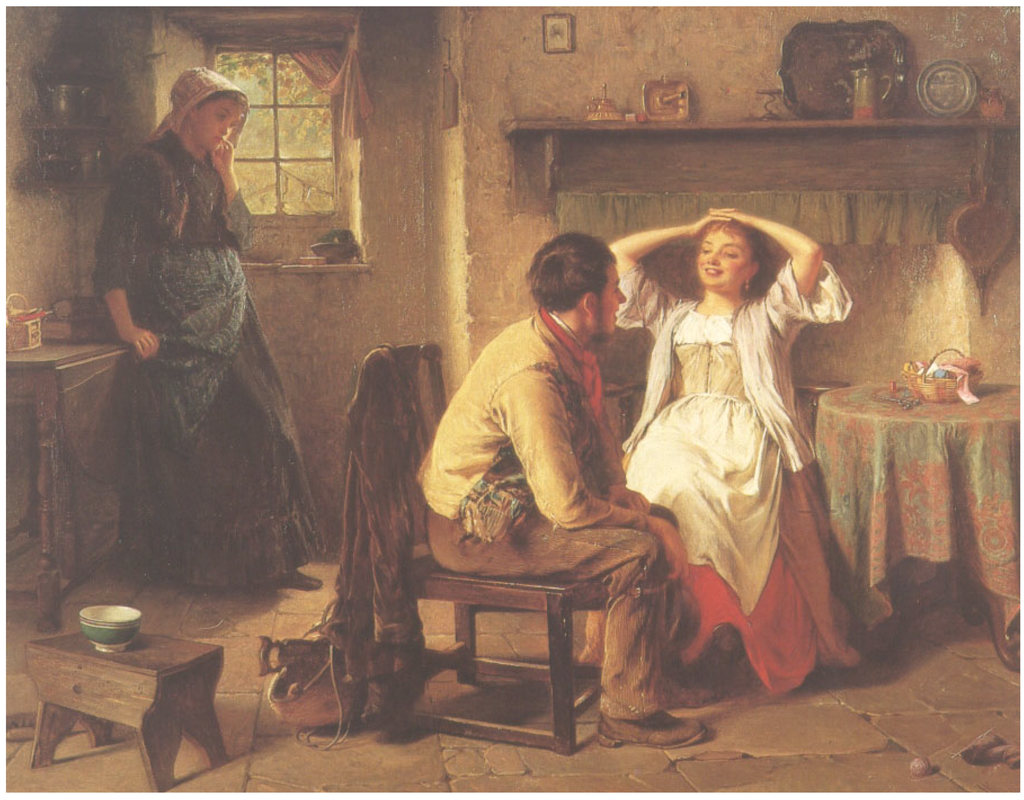
I. As we get into the realm of meaning, things get a little more interesting. Lets take a look at the images below. In all of the scenarios someone says “Can you open the door?”. What is the meaning of it in each situation? Is it the same? if it is/is not, how do you explain it



II. Now perform the short dialogues with a partner

A: So—did you?
B: Hey—who wouldn’t?
A: there’s a bookshop over there
B: no!
A: why not?
B: tired!

Pragmatics is the study of the relationships between
linguistic forms and the users of those forms. It (…)
allows humans into the analysis. The advantage
of studying language via pragmatics is that one can talk about
people’s intended meanings, their assumptions, their purposes or
goals, and the kinds of actions (for example, requests) that they
are performing when they speak. The big disadvantage is that all
these very human concepts are extremely difficult to analyze in a
consistent and objective way. Two friends having a conversation
may imply some things and infer some others without providing
any clear linguistic evidence that we can point to as the explicit
source of ‘the meaning’ of what was communicated. (Yule, G. Pragmatics. 2005)
Join your friends in groups. Decide whether you agree or disagree with the statement. Be prepared to defend your position to the whole class with at least one concrete, real-life examples for each sentence
1“A listener’s primary job is to figure out the speaker’s intention, even if it means completely ignoring the literal meaning of the words.”
2“Without a specific context, a sentence is just a collection of words; it has no real meaning.”
3“Being indirect (communicating more than is said) is fundamentally inefficient. In an ideal world, everyone would say exactly what they mean.”
4“The social relationship between two speakers is more powerful than grammar in determining what an utterance actually means.”
5“If a misunderstanding occurs, it is always the speaker’s fault for not being clear enough.”
6“The ‘pragmatics wastebasket’ is no longer needed. Modern linguistics has successfully created formal rules for everything that used to be considered ‘messy’.”
7“Sarcasm is a perfect example of pragmatics in action: the meaning is created entirely by the context and speaker’s intention, not by the words themselves.”
8“You can understand the syntax and semantics of a foreign language perfectly but still be a terrible communicator if you don’t understand its pragmatics.”
9“Physical objects in our environment (a ringing phone, an open window) are just as much a part of the ‘context’ of a conversation as the words that came before.”
10“Every time we speak, we are trying to change something in the world, even if it’s just changing what another person believes. There is no such thing as a neutral statement.”
now, take a look at this video
now time to work! do the following exercises
downing – Unit 16, exercise 1, p. 170
Post scriptum
Teaching Pragmatics

Understanding the pragmatics of a language helps learners use language appropriately in different situations, but what does pragmatics mean for the English language teacher? It is important to realize that there is no one best way to teach pragmatics. Teachers can build information on pragmatics into existing lesson plans, or they might add information or lessons on pragmatics as the need becomes evident. (…) Lessons on pragmatics often relate to different language functions, such as greetings, requests, complaints, invitations, and apologies and often include the home culture and the target culture, but they might also include other cultures as well.
Now time to read and discuss
Read (and listen) to the song below. What is the situation it describes? How does it connect to your experience? What does the title mean? The lyric is based on some constrastive elements. Which elements are these? How do they relate to what we have studied up to now?
Deitic Situation
Message on my phone.
Words stand all alone.
You say, “I’ll be there.”
I’m hanging in the air.
You say, “See you then.”
Tell me, where and when?
These pointers spin my head.
Lost in what you said.
(chorus) It’s the context, baby.
Who and where and when.
It’s the “I” and “you,” baby.
The “now” and “then.”
Your “here” is not my “here.”
Your “that” is not my “this.”
A deictic situation.
A confusing kiss.
You say “I.” That’s you.
My “I” is me. It’s true.
You hold up “this” for me.
It’s “that” from what I see.
Same room. Different space.
I read it on your face.
I try to break on through.
My point of view to you.
Not in a book.
Not set in stone.
Meaning just shifts
With your tone.
Each word’s a signal.
Anchored to you.
Your time. Your space.
Your point of view
Here. There.
(Point me somewhere.)
Now. Then.
(Let’s try again.)
Me. You.
Deictic…
semana 4 – looking back
Our class today is an invitation to look back into what we have studied up to now. And I hope it is not in anger. And as we are looking back, I invite you to take a look in how movie pictures trailers were in the late 50´s. Here is one, presenting Looking back in anger, an adaptation of the play under the same name by John Osborn.
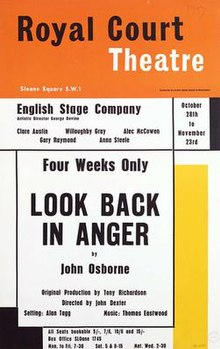
“Written in 17 days Look Back in Anger was a strongly autobiographical piece based on Osborne’s unhappy marriage to actress Pamela Lane. While Osborne aspired towards a career in theatre, Lane was more practical and materialistic. It also draws from Osborne’s earlier life; for example, the wrenching speech of witnessing a loved one’s death was a replay of the death of his father, Thomas. What it is best remembered for, though, are Jimmy’s tirades. Some of these are directed against generalised British middle-class smugness in the post-atomic world. Many are directed against the female characters, a very distinct echo of Osborne’s uneasiness with women, including his mother”.
what do you look back in anger?
what have we seen until now?
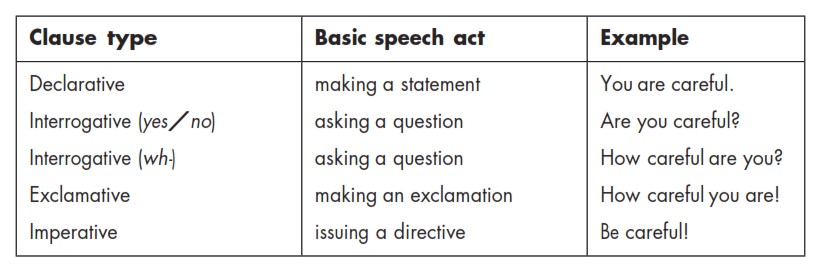
1. Speech acts are the acts we perform through words (statements, questions, exclamations and directives, the latter covering orders, requests and instructions among others).
2. Each of these basic speech acts is associated in the grammar with a type of clause: the declarative is typically used to encode a statement, the interrogative a question, the imperative a directive and the exclamative an exclamation. These are the direct correspondences between form and function that we refer to as direct speech acts.
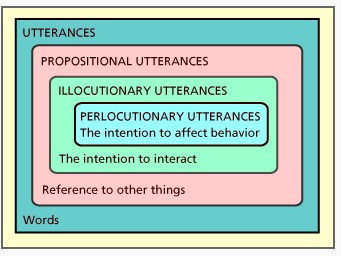
3. Indirect correspondences are also common in English. Thus declaratives, as well as encoding statements, can be used to ask questions, utter exclamations and issue directives, in addition to other speech acts such as promising and warning. In such cases the form is used to convey an ‘intended meaning’ or ‘illocutionary force’ that is different from its basic one.
4. Even more indirectly, the words we use do not always fully express our intended speech act. For example, it’s cold in here might be intended, and interpreted, as a request to turn up the heating. Hearers use inference to recover the intended meaning at specific points in a conversation, based on assumptions of cooperativeness, truth, relevance, and cultural knowledge.
Avaliação I
PREPARE SUAS RESPOSTAS NUM ARQUIVO DO WORD OU EQUIVALENTE (NÃO ENVIAR LINKS PARA DRIVES) COM TODA A SUA IDENTIFICAÇÃO (NOME COMPLETO, MATRÍCULA, CURSO E IDENTIFICAÇÃO DA DISCIPLINA). ENVIE O TRABALHO PARA TAREFASPROFMARCELLO@GMAIL.COM ATÉ O DIA 17/10/25.
TRABALHOS ENVIADOS APÓS ESTA DATA SOFRERÃO DECRÉSCIMO DE 50% NA NOTA.
ATENÇÃO: OS EMAILS DEVEM CONTER NO SEU ASSUNTO O NOME DA DISCIPLINA, A IDENTIFICAÇÃO DA TAREFA E SEU NOME, EXEMPLO: LÍNGUA INGLESA III, AVALIAÇÃO I, FERNANDA RIBEIRO.
Questions
Questions typically seek information from the hearer that the speaker does not know. Responding to different motivations are questions functioning as preliminaries, rhetorical questions and leading questions of various types. The latter include interrogatives that are biased according to the kind of answer the speaker expects, towards a neutral, positive or negative assumption. These are marked by non- assertive forms (any), assertive forms (some) and negative forms (no, not any), respectively. Positive assumptions allow for positive forms,with some even in negative questions. Other leading questions consist of tentative declaratives with conducive markers and appropriate intonation. Ellipted verbless clauses rely heavily for interpretation on intonation and their position in the exchange.
Sentence challenge
- Observe the sentences below. Think of a context to each one. What are their functions in discourse?
I suppose you’ve heard the news?
I understand you’re leaving your job?
I hear you’ve been offered a new post?
She wasn’t invited to the wedding, then?
So there’s nothing we can do?
She knows all about it, of course?
But surely you can just defrost it in the microwave?
So you took the documents to which Ministerial office? And you left them
where?
Directives
Get out of here!
Keep off the grass.
Please close the window!
Don’t tell me you’ve passed your driving test!
Do that again and you’ll be sorry.
Pass your exams and we’ll buy you a bike.
Don’t forget your umbrella!
Mind the step!
Feel free to take as many leaflets as you like.
Just listen to this!
Try one of these! o
Let’s go jogging!
Come on now, don’t cry!/ Go on, have a go!
Sleep well! Have a safe journey!
Suppose he doesn’t answer.
Some people make easy profit. Take drug handlers, for example.
About directives
1 – The clearest way of trying to get someone to do something is by an imperative. Strong impositions that invoke power and status are not socially acceptable in English in many everyday situations, even when accompanied by please. Orders are usually avoided and are preferably made indirectly as requests by using other clause types. Question tags either soften or heighten the force of the directive; with imperatives, tags tend to sound familiar.
2 – Modalisation is another resource for producing directives. With modalised declaratives the effect is usually stronger and more formal, while modalised interrogatives tend to sound more polite. In contexts of urgency (Help! Stop!) the imperative can be used, as in others in which the hearer’s wel-
fare is referred to (Sleep well! Have fun!).
3- Besides directing other people to do things, the speaker can commit him/ herself to carrying out an act. Performative uses of promise and modal will with a declarative do precisely this. The particle let’s is used to make suggestions for actions, usually to be carried out jointly with the addressee. It
can also function, however, as a disguised order or request.
Last evaluation
PREPARE SUAS RESPOSTAS NUM ARQUIVO DO WORD OU EQUIVALENTE (NÃO ENVIAR LINKS PARA DRIVES) COM TODA A SUA IDENTIFICAÇÃO (NOME COMPLETO, MATRÍCULA, CURSO E IDENTIFICAÇÃO DA DISCIPLINA). ENVIE O TRABALHO PARA TAREFASPROFMARCELLO@GMAIL.COM ATÉ O DIA 27/11/25.
TRABALHOS ENVIADOS APÓS ESTA DATA SOFRERÃO DECRÉSCIMO DE 50% NA NOTA.
ATENÇÃO: OS EMAILS DEVEM CONTER NO SEU ASSUNTO O NOME DA DISCIPLINA, A IDENTIFICAÇÃO DA TAREFA E SEU NOME, EXEMPLO: LÍNGUA INGLESA III, AVALIAÇÃO I, FERNANDA RIBEIRO.
Multiple Choice Questions
Please select the most accurate answer for each question based on the provided text.
1. According to Unit 17.3, why would a speaker, when making an offer, typically ask, “Would you like some more coffee?” instead of “Would you like any more coffee?”
(A) The speaker has a “neutral assumption” about the answer1.
(B) The speaker is using a non-assertive form to express politeness2.
(C) The speaker has a “positive assumption” that the offer will be accepted3.
(D) The speaker is using some because the question is negative-interrogative.
2. Based on the criteria in Unit 16.1, which of the following utterances functions as an “explicit performative”?
(A) “He promises he will be careful.”
(B) “I advise you to book early to avoid disappointment”4.
(C) “You are advised to book early”5.
(D) “I think you should book early.”
3. Unit 14.1 states that the primary syntactic distinction between the declarative, interrogative, and imperative clause types is achieved by:
(A) The use of *wh-*words (like what, how) versus *wh-*ever words (like whatever)6.
(B) The semantic illocutionary force of the utterance (i.e., whether it is a statement or a question)7.
(C) The variation in the presence and ordering of the Subject (S) and the Finite (F) elements8.
(D) The mandatory inclusion of a modal auxiliary (like will or must) in the verbal group9.
Reflexive Challenge Questions
Please provide a detailed analytical response to the following questions.
1. Reconciling Imperative “Cost” and “Benefit”
Unit 18.3 introduces a “cost-benefit scale” to explain politeness in directives, suggesting that an imperative becomes less polite as the “cost to the addressee” increases (e.g., “Peel those potatoes”)10. However, Unit 18.1 lists “warnings” (e.g., “Mind the step!”) and “good wishes” (e.g., “Sleep well!”) as common functions of the imperative.
Reflect: “Mind the step!” is a directive where the cost of non-compliance is extremely high (potential injury). Why is this imperative considered socially acceptable and polite, while “Peel those potatoes!” is not? How does the “cost-benefit scale” account for the function of warnings?
2. The Interpersonal Function of Question Tags
Unit 14.9 distinguishes between two main types of declarative mood tags: reversed polarity (e.g., “It was quiet, wasn’t it?”) and constant polarity (e.g., “Oh, so you’re the new assistant, are you?”).
Reflect: Beyond their syntactic form, analyze the interpersonal dynamic implied by each tag type. The text notes that a reversed tag (with rising intonation) “indicates doubt” and seeks confirmation, while a constant tag often expresses a “conclusion or inference”. How do these different functions reflect different assumptions the speaker is making about the hearer and the state of their shared knowledge?
Avaliação do curso
Peço apenas, por gentileza, respondam a avaliação do curso aqui
resultados finais (e minhas notas)
| Nome do Aluno | situação final | MARCELLO OLIVEIRA (GRA) |
|---|---|---|
| Amanda Lindgren Victor do Espirito Santo | APROVADO/A | 10 |
| Anamaya de Oliveira Paranhos | APROVADO/A | 10 |
| Ana Beatriz de Aguiar Almeida | APROVADO/A | 10 |
| Ana Beatriz de Souza Areias Silva | APROVADO/A | 10 |
| Ana Clara Pereira Cinne Costa | PROVA FINAL | 10 |
| Andre Luiz da Silva Siqueira Filho | APROVADO/A | 9 |
| Angel Monique Coelho de Almeida | REPROVADO/A POR FALTA | 0 |
| Arthur Bonacorse Quintanilha | APROVADO/A | 9,5 |
| Arthur Vieira Castanheira | APROVADO/A | 9,5 |
| Braian Gabriel da Silva Siqueira | PROVA FINAL | 10 |
| Emily dos Santos Silva | REPROVADO/A POR NOTA | 5 |
| Harry Lopes Arcoverde | APROVADO/A | 9,5 |
| Isabela Lemos de Souza | APROVADO/A | 9 |
| Isabella Apolonio Alves da Silva | APROVADO/A | 8,5 |
| Isabel Cardoso Silva Junior | APROVADO/A | 10 |
| Juliana de Oliveira Evangelista de Souza | APROVADO/A | 9,5 |
| Laura Fontes Leal | APROVADO/A | 10 |
| Leticia Franca de Souza | APROVADO/A | 10 |
| Lucas Pereira Siqueira da Silva | APROVADO/A | 9,5 |
| Manuela Lupia dos Santos | APROVADO/A | 10 |
| Maria Clara Gomes Ramos | APROVADO/A | 9 |
| Maria Eduarda Oliveira da Costa | APROVADO/A | 9,5 |
| Maria Eduarda Oliveira Velloso do Carmo | APROVADO/A | 9,5 |
| Michael Dias dos Santos Rodrigues | APROVADO/A | 9,5 |
| Nicholas Hoara dos Santos Cavalcante | APROVADO/A | 9,5 |
| Nicolle Lobo de Araujo Cásseres | APROVADO/A | 10 |
| Rafael Luiz Lima de Oliveira | REPROVADO/A POR FALTA | 0 |
| Raphaela Coutinho Winterle | APROVADO/A | 10 |
| Renan Dionizio da Silva Souza dos Anjos | APROVADO/A | 9 |
| Renata Leris Alves | APROVADO/A | 9 |
| Suellen Gagliano Brito | APROVADO/A | 9 |
| Vinicius Travessa de Souza Oliveira | APROVADO/A | 10 |
| Vivian Machado Almeida de Lacerda | APROVADO/A | 10 |